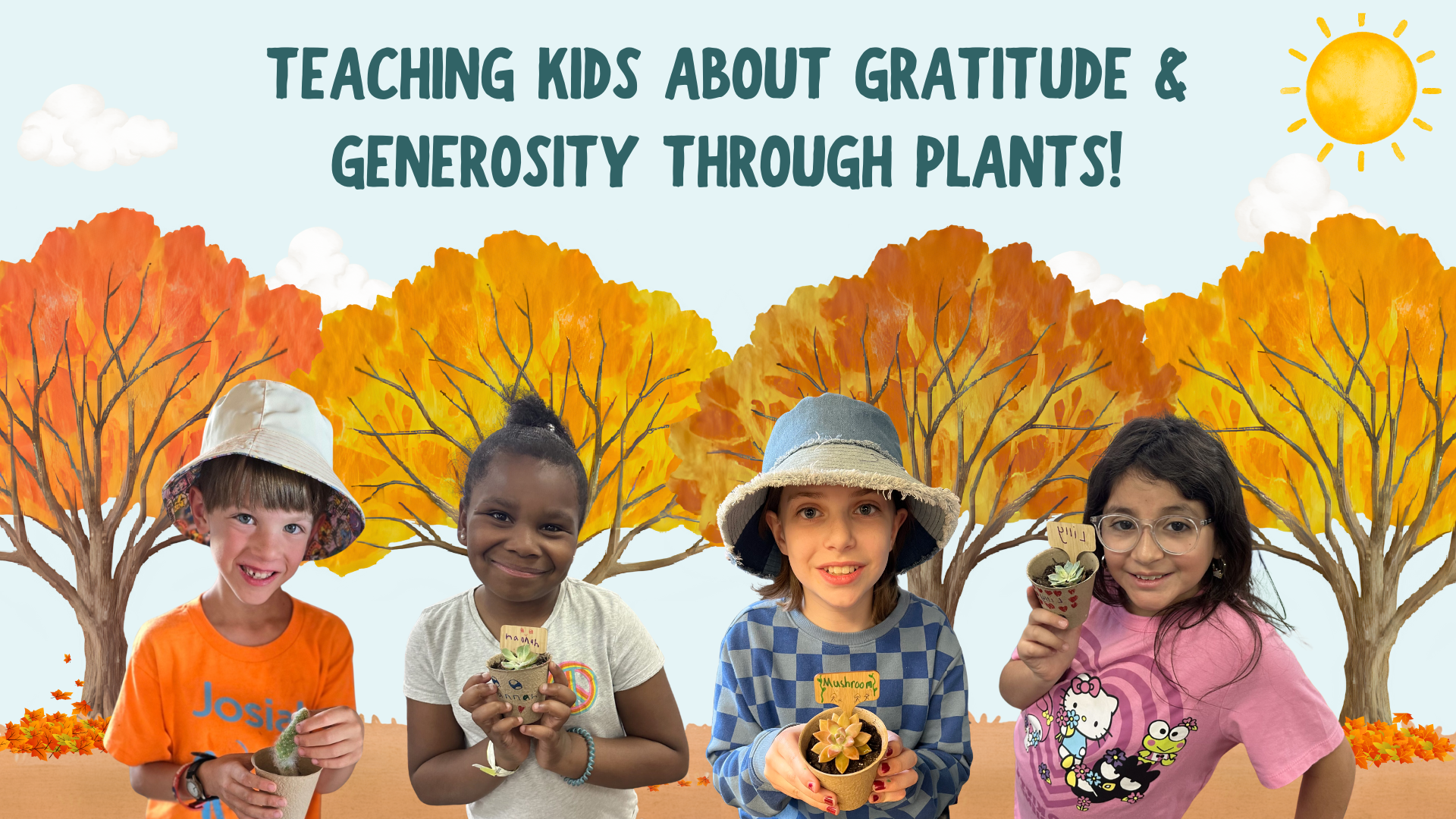
Teaching Kids About Gratitude & Generosity Through Plants!

The Spirit of Thanksgiving

Thanksgiving has always been about gathering with loved ones and giving thanks — not only in words, but through action. The holiday celebrates abundance, not just in what we receive, but in what we share. More and more families are seeking creative ways to honor this spirit, whether through volunteering, exchanging homemade gifts, or finding small ways to reconnect with nature.

One simple yet powerful way to embody the spirit of the holiday is by giving kids the gift of indoor plants. Giving plants to children is a beautiful, hands-on way to nurture gratitude and generosity this Thanksgiving.

At Neighborhood Forest, we love teaching kids how generosity flows in a cycle:

We give a free plant → children give their plant their time, love and care → and the plants give back through beauty, oxygen, and joy.

Plants are living reminders of the blessings we enjoy and the responsibility we carry to give back — to each other and to the Earth. As children nurture their plants, they experience firsthand how abundance grows when it’s shared. Gratitude becomes more than a feeling; it becomes a practice that takes root and flourishes over time.

Our Indoor Plant Program

At Neighborhood Forest, we believe gratitude can be cultivated when it’s nurtured through a connection with nature. We want to give every child the joy of planting and watching trees grow. Not all children have access to a yard or space to plant a tree. That’s why we launched our Indoor Plant Program, designed to give children the joy of taking care of a little piece of nature inside their home.

This November, just before Thanksgiving, we will host our 2nd Annual Fall Indoor Plant Giveaway at more than 100 schools, libraries, and youth groups across the country. We will reach over 10,000 children this year — five times more than last year’s 2,000 participants. Each child will receive an indoor succulent plant that is simple to care for, durable, and fun to grow.

The program goes beyond gifting plants:

    • Hands-On Gratitude: Children learn that growing and caring for a plant is an act of patience, responsibility, and appreciation.
    • Accessible Growing: Even families without outdoor space can participate in the joy of nurturing life by growing plants indoors.
    • Meaningful Thanksgiving Gift Ideas: Plants serve as lasting reminders of abundance, generosity, and the spirit of giving thanks.

Our program give kids a sense of connection to a greater story — one where caring for plants leads to caring for each other and the environment. 

Why Succulents Make Wonderful Gifts

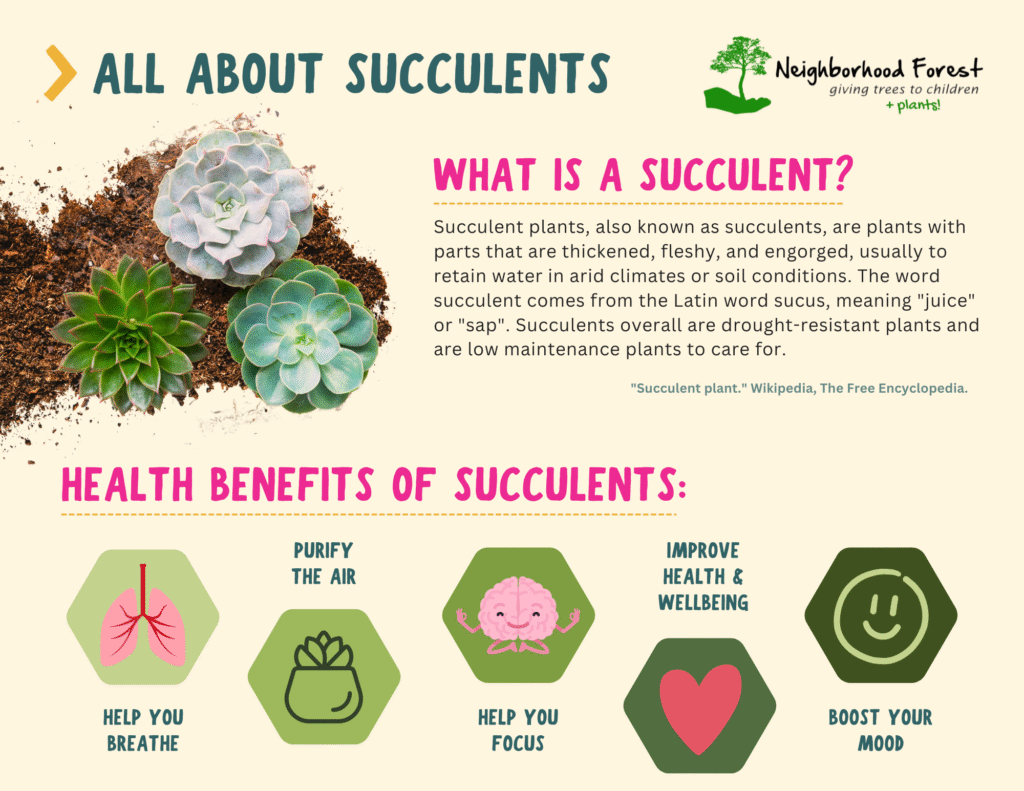
Succulents are small but mighty — perfectly embodying the spirit of abundance and Thanksgiving. They offer incredible benefits:

  1. They help you breathe better! During photosynthesis, plants produce oxygen, but most respire at night, releasing carbon dioxide. Succulents, however, continue to produce oxygen at night, making them great for bedrooms to boost oxygen while you sleep!
  2. They clean the air! Succulents take in yucky stuff (volatile organic compounds) from the air and turn it into food, making your room air fresh and clean!
  3. They help you focus & remember better:Having succulents around can help you concentrate and improve your memory! A University of Michigan study found that memory retention improved as much as 20% when plants were present.
  4. They make you feel better: Succulents can help you feel less stressed, happier, and even help with headaches and coughs. Research shows that people who have plants in their room feel less tired and use less medicine to feel better.
  5. They boost your mood!: Succulents can help you relax and feel more calm. Taking care of your succulents can bring you joy and make you feel proud!

Plants and trees offer many additional benefits, making them lasting gifts that keep giving well beyond Thanksgiving.
Teaching kids about Gratitude and Generosity Through Growing Plants

By gifting children plants, families encourage them to see gratitude as an active practice. Caring for plants helps kids develop:

    • Patience: Plants grow slowly, teaching children to appreciate gradual progress.
    • Mindfulness: Caring for plants fosters calm focus and encourages kids to slow down and observe.
    • Responsibility: Regular watering and care routines give kids a sense of ownership and accountability.
    • Creativity: Decorating their pot and bamboo label and giving their succulent a name inspire artistic expression and creativity through growing plants.
    • Connection: Kids learn that living things thrive when nurtured, reinforcing gratitude for relationships in their own lives.

As children grow plants indoors, they also develop an appreciation for nature and its role in sustaining us. Programs such as the mini food forest initiative take this lesson further by showing kids how small-scale planting can support communities.

FAQs

    • What is a succulent? A succulent is a plant that stores water in its fleshy leaves, stems, and/or roots, allowing it to survive in arid environments where water is scarce. They are known for being drought-tolerant and are often low-maintenance, thriving on neglect and requiring well-draining soil.
    • Are Succulents toxic to pets? Some succulents are toxic to pets so it’s best to keep them out of reach.
    • What kind of succulents do you give to children? We partner with family-run nurseries that grow hundreds of varieties. Using the Google app, you can snap a photo to identify your plant. Common varieties include Echeveria, Christmas Cactus, and Crown of Thorns.
    • How much water should I give it? In general, succulents are very drought tolerant. We recommend watering when the soil is dry, or about 1-2 times a week. Be sure to water the soil itself, not the leafy part of the succulents.

About Neighborhood Forest

Neighborhood Forest is a nonprofit organization dedicated to giving every child the joy of planting and watching a tree grow. Since 2010, we’ve partnered with schools, libraries, and youth groups to distribute free trees to children across North America every Earth Day. Our mission is to instill a sense of wonder and responsibility toward the environment in young hearts and minds.

Here are some ways you can get involved:

Mini Food Forest Program: Teaching Kids to Grow Their Own Future

Our Mini Food Forest Program introduces children to permaculture by teaching them how to care for a mini food forest—a self-sustaining, multi layered ecosystem with edible and medicinal plants. Kids learn about regenerative gardening and how plants work together to attract pollinators, improve soil health, and provide food.

Through our corporate partners, we are bringing this program to life in communities across North America. Learn more in the video below, highlighting our partnership with Mortenson.

Introducing the Neighborhood Forest Mini Food Forest Program

Curious how your company can get involved? Reach out to us at info@neighborhoodforest.org


Every October, the world pauses to reflect on food security and sustainability. World Food Day 2025, observed on October 16, serves as a reminder that access to nutritious food is both a basic human right and a global challenge. For families and educators, this day is also an opportunity to inspire children to engage with nature, food systems, and the future of the planet.

Neighborhood Forest’s Mini Food Forest Program

As World Food Day 2025 approaches, there has never been a better time to inspire children to plant for tomorrow. Neighborhood Forest is dedicated to empowering kids by giving them free trees and edible plants every Earth Day, helping them connect with nature in their own neighborhoods, homes, and schools.

A mini food forest is a playful, hands-on way for kids to learn responsibility, care for the earth, and discover that when we nurture nature, it gives back to us. With roots in permaculture ethics (earth care, people care, and fair share), each mini forest allows a child to experience pride, ownership, and joy in tending their own little piece of the planet.

Here are some common questions about mini food forests:

    • What is a food forest? It’s a small, layered ecosystem of edible plants designed to mimic a natural forest.
    • How does a mini food forest differ? It is a potted setup with three permaculture-friendly edible plants, perfect for growing indoors or outdoors.
    • Why should kids be involved? Children’s garden projects teach responsibility, resilience, and an appreciation for nature.
    • Do you need a big yard? No. A food forest can fit into many spaces — even a small backyard garden or a sunny windowsill in your home.
    • Is it complicated to maintain? Not at all. Once established, the food forest design is largely self-sustaining.
    • How is this connected to World Food Day? It highlights local, hands-on solutions to global food challenges.

By connecting kids to the soil and seeds, we help them learn not just how to grow food but also how to nurture communities and ecosystems.

How Food Forests Work

A food forest is an intentional ecosystem designed to mimic the layers of a natural forest with a canopy, understory, shrubs, herbs, ground cover, roots, and vines, but every layer provides something edible or useful. Think apples in the canopy, berry bushes in the shrub layer, mint on the ground, and carrots underground. Because the plants are chosen to support one another, food forests encourage biodiversity and symbiotic relationships, creating self-sustaining systems that require little maintenance and few unnatural interventions once established.

This concept of food forests can be adapted for urban gardening and scaled to fit almost any space, even a single pot. Whether large or small, food forests are not only beautiful but also practical, offering children a living classroom where they can explore sustainable gardening firsthand.

Schools and communities across North America are already exploring these practices, with support from initiatives such as Neighborhood Forest’s mini food forest program.

Benefits for Kids

In addition to fruits and vegetables, food forests provide children with life lessons that go far beyond the garden bed:

    • Practical Skills: Kids learn how to grow food while understanding soil, water, and compost cycles.
    • Connection to Nature: Planting trees and tending gardens help children develop a lifelong love of the environment.
    • Healthy Habits: Tasting food they grew themselves often leads children to eat more fruits and vegetables.
    • Confidence and Resilience: Watching seeds sprout and trees mature gives kids a sense of accomplishment and patience.
    • Community Engagement: When a children’s garden project involves family or classmates, it strengthens social bonds.

The benefits ripple outward. Kids who engage with food forests are more likely to value planting for the future and support sustainable practices as adults.

How to Start a Food Forest With Kids

Getting started doesn’t require expertise or large spaces. Families and schools can create food forests step by step. Here’s how:

    1. Choose a Location: Look for a spot with plenty of sunlight (at least six hours a day), healthy soil, and easy access to water. A small patch of land, the corner of a schoolyard, or even a sunny strip in your backyard can become the foundation for a thriving mini food forest.
    2. Plan the Layers: A good food forest design includes:
      • Canopy (fruit trees such as apples or pears)
      • Shrubs (berries, currants)
      • Herbs (basil, mint)
      • Ground cover (clover, strawberries)
      • Roots (carrots, onions)
      • Vines (beans, grapes)
    3. Plant Together: Involve kids in digging holes, planting seeds, and watering.
    4. Keep It Simple: Start with a handful of plants and expand each season.
    5. Observe and Celebrate: Encourage kids to journal, draw, or photograph their progress.

Starting and maintaining a mini food forest is even easier, since it follows the same basic steps on a smaller scale. Instead of occupying a patch of land, a mini food forest can be contained in a single pot with three permaculture-friendly edible plants. This smaller version still teaches the same lessons about layers, plant relationships, and sustainable gardening, but it’s more manageable and accessible for young kids.

Learning Opportunities Beyond Gardening

Mini food forests become outdoor classrooms for much more than planting:

    • Science: Children witness pollination, soil biology, and water cycles in real time. Learning about trees and their health benefits helps deepen their understanding of the natural world.
    • Math: Measuring plant growth, spacing crops, and tracking harvest yields offer hands-on lessons.
    • Nutrition: Kids learn where food comes from and how fresh produce benefits their health.
    • History and Culture: They discover how communities have always relied on local food systems.
    • Social Responsibility: Sharing the harvest with neighbors or local pantries instills values of generosity.

These gardening projects help prepare young learners to see themselves as stewards of both land and community.

About Neighborhood Forest

Neighborhood Forest is a nonprofit organization dedicated to giving every child the joy of planting and watching a tree grow. Since 2010, we’ve partnered with schools, libraries, and youth groups to distribute free trees to children across North America every Earth Day. Our mission is to instill a sense of wonder and responsibility toward the environment in young hearts and minds.

This past Earth Day, over 112,000 kids at 1,500 institutions across North America received their very own trees and plants. Some even wrote names for their mini food forests, making them truly their own. If your institution hasn’t yet participated, now is the perfect time to join the movement and be added to our list for Earth Day 2026. Together, we can raise a generation that not only plants trees but also grows a culture of care, resilience, and sharing.

Here are some ways you can get involved: