The Mental Health Benefits of Trees: Why Nature Makes Us Happier
Have you ever noticed how good you feel after spending time outside? Maybe you’ve climbed your favorite tree in the backyard, or walked through a park filled with tall oaks and maples. That wonderful feeling isn’t just in your imagination! Scientists have discovered that trees actually change what’s happening inside your brain, helping you feel calmer, happier, and more focused.
The link between nature and mental health is so powerful that doctors and teachers are paying attention. Neighborhood Forest gives free trees to kids across North America because we understand something important: when you plant a tree and watch it grow, you’re not only helping the planet. You’re also giving yourself a gift that keeps making you feel better, year after year.
Trees Help You Relax
Your body has a built-in alarm system called your nervous system. When you’re worried about a test or upset about something, this system fires up and makes your heart beat faster. Trees have an incredible power to calm all that down.
When you hang out with trees, your body produces less of the stress hormone cortisol. Think of cortisol like a worry chemical floating around inside you. Natural stress relief happens when you breathe in fresh air under leafy branches, listen to the wind, or simply rest in a green space. Your breathing slows down, your shoulders relax, and that tight feeling in your chest starts to fade away.
In Japan, this practice is called Shinrin-yoku, often translated as “forest bathing,” which means soaking up the forest atmosphere (no actual bathing required). You don’t need a huge forest, though. Even a single tree in your yard or a small collection of plants can help your nervous system find its calm again.
Trees Make Learning Easier
Have you ever struggled to concentrate on homework, but then found it easier to think after going on a walk or playing outside? Your brain needs breaks from screens and indoor spaces to work at its best.
Research shows that kids who spend regular time outdoors perform better in school. In addition to helping you calm down, nature therapy can also sharpen your ability to pay attention and solve problems. Here’s what happens when you add more green time to your day:
Your attention span gets longer and stronger
You remember information more easily
Creative ideas flow more freely
Problem-solving becomes less frustrating
Your mind feels clearer and more energized
Neighborhood Forest provides a variety of trees species every Earth Day for children grow their own forest right in their backyard!
Trees Lift Your Mood
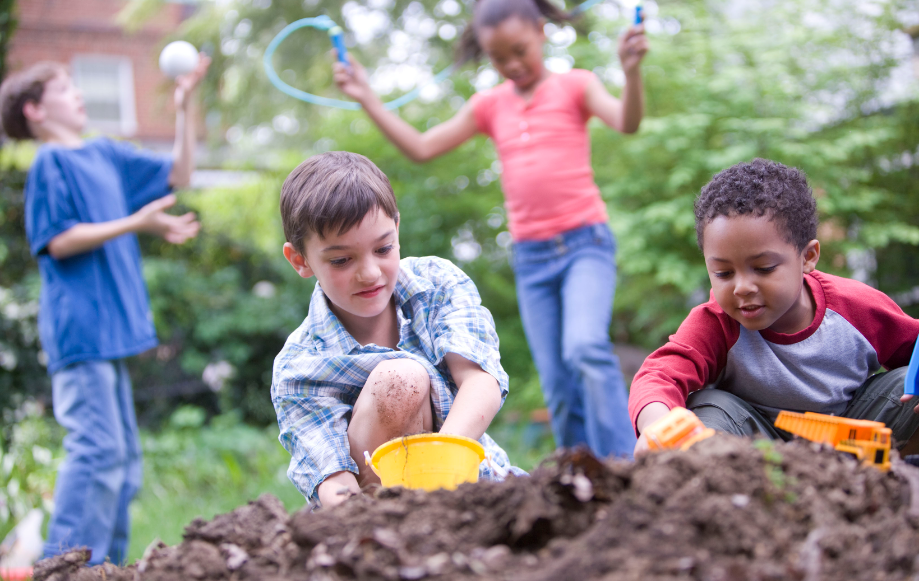
Trees have a way of cheering you up. They spark your brain to release serotonin and dopamine, making your mood feel a bit brighter. Outdoor play can be a powerful way to soak up that natural boost.
The benefits of nature exposure show up quickly. After just 20 minutes in an outdoor space, even without exercise, people report clear improvements in well-being, feeling happier and more relaxed. Colors seem brighter, problems seem smaller, and life feels more hopeful.
Planting and caring for a tree gives you purpose. Watching your tree grow taller each season fills you with pride. These positive feelings build up over time, creating a foundation of lasting happiness.
Trees Make Places Feel Like Home
Trees help us feel like we belong somewhere. When you have a special tree you’ve climbed, read under, or planted yourself, that place becomes part of who you are.
Tree therapy works because it connects you to something beyond yourself. Here are simple ways to weave trees deeper into your daily life:
Pick one tree to visit regularly and watch it change through the seasons (bonus points if you give it a name!)
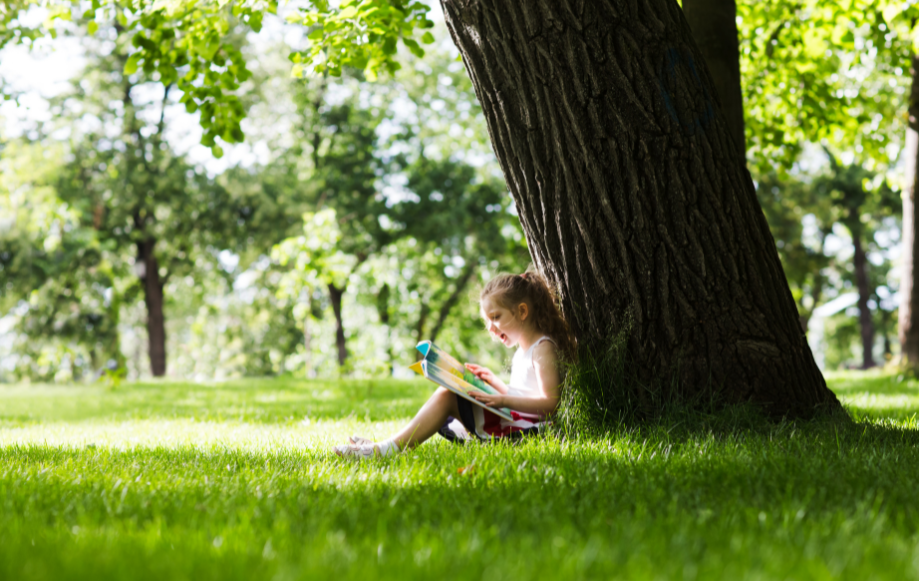
Create a tradition of picnicking or reading under the same tree with your family
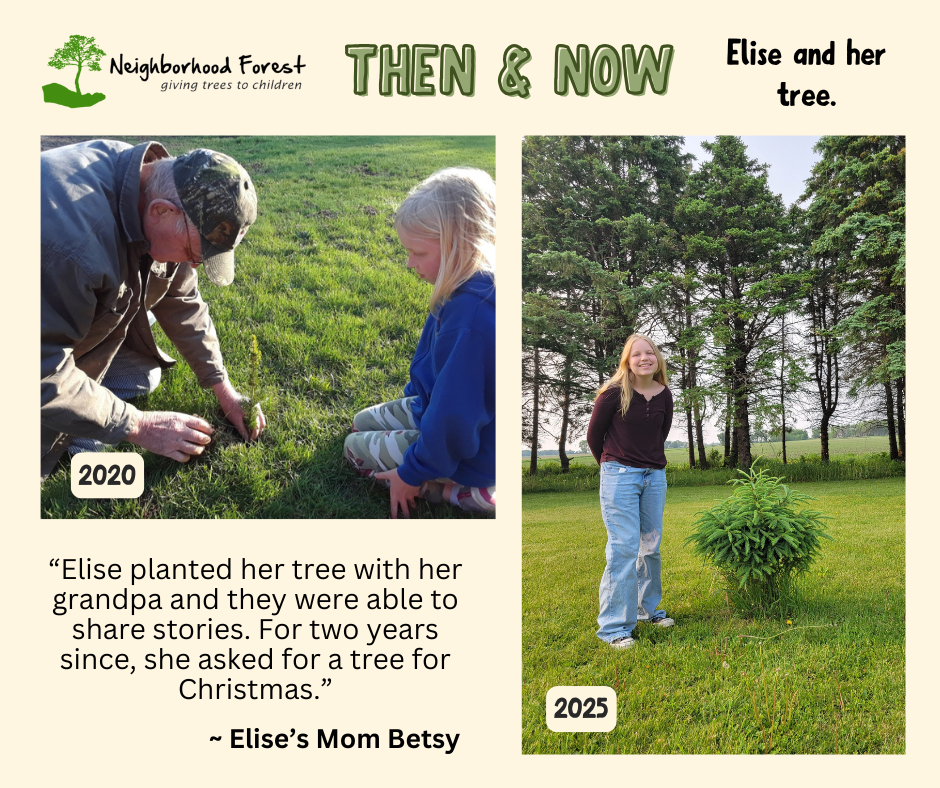
Take photos next to your tree each birthday to see how you both grow
Read nature stories together as a family or curl up with them on your own
Start a journal about what you notice during your tree visits
These small rituals transform ordinary trees into landmarks of your life. They become the keepers of your memories and part of your personal story.
How to Be a Tree-Friend Every Day
You don’t need a big yard or to live near a forest to bring more trees into your life. Start simple. Try nature-based activities, such as collecting leaves or drawing bark textures. If you don’t have outdoor space, grow an indoor plant and care for it each day.
The most important thing is consistency. Even five minutes with a tree and in nature counts. Touch its bark, sit under its branches, or simply look up through its leaves at the sky. Your brain will thank you for it, and over time, you’ll build a friendship with nature that makes every single day a little bit brighter!
About Neighborhood Forest
Neighborhood Forest is a nonprofit organization dedicated to giving every child the joy of planting and watching a tree grow. Since 2010, we’ve partnered with schools, libraries, and youth groups to distribute free trees to children across North America every Earth Day. Our mission is to instill a sense of wonder and responsibility toward the environment in young hearts and minds.
Levi Tracey (4th grade) and Elizabeth Sayler (3rd grade) are two students at Avon Montessori Academy in Avon, Ohio. Together they worked to plan and execute a bake sale raising over $700 dollars to donate to Neighborhood Forest! Julie Felder, Head of the School, interviewed these two students about their wonderful efforts. See their responses below!
WHY DID YOU WANT TO DO A FUNDRAISER FOR NEIGHBORHOOD FOREST?
Levi: It wasn’t always going to be for Neighborhood Forest. At first it was to buy trees and plant them. I found out about Neighborhood Forest through our local library and we did research about them and went on their website. We liked the organization and they have a good mission to get children trees.
Elizabeth: Because we were driving on a field trip and I was sitting with Levi. We saw a lot of garbage outside. And we thought it would be good to do a fundraiser to save the earth because there is a lot of litter and garbage outside.
WHY ARE TREES/THE ENVIRONMENT IMPORTANT TO YOU?
Levi: I like nature, it’s fun to be outside. And I want it to last longer.
Elizabeth: So that we can enjoy being outside instead of being inside. Climbing trees and being outside on nice days is so fun.
WHAT MAKES YOU MOST PROUD OF YOUR FUNDRAISING EFFORTS?
Levi: That we were able to get 150 trees to people through the organization. That’s a lot of trees for a lot of kids – it’s gonna be a lot of trees!
Elizabeth: That we raised a lot of money and a lot of people have supported us.
ANYTHING ELSE TO ADD?
Elizabeth: Thank you to everyone who supported us.
Thanks to Levi and Elizabeth’s generosity and hard work, Avon Montessori Academy will be receiving 100 White Pine Trees for all of their students to plant for Earth Week 2023! The rest of their donation will be used to provide more children trees in our program. We are so deeply touched and moved by this unexpected act of love, generosity, and service by these two young changemakers.
“The mission of Avon Montessori Academy is to cultivate and inspire each individual within the school community to excel as lifetime scholars, creative thinkers, and responsible citizens. Members of our school community act with respect, compassion, integrity, and heart. Weaving the Montessori philosophy with a warm and charming environment, we place emphasis on whole child development, peace education, and care of the Earth.”
Click here for a downloadable version of the Parent FAQs
What kind of tree will we be getting?
Neighborhood Forest aims to provide native trees in all the regions we serve. Last year we gave away 11 different species. We tend to provide species on a state-by-state basis and like to provide different species each year to provide variety and diversity of trees.
When will my tree be arriving and will it be shipped directly to my address?
We aim to have the trees arrive to your school, library, or youth group leader in time for Earth Day.If you are ordering your free tree from your child’s school, your child should bring the tree home when it is distributed at their school aroundEarth Day (April 22).
If you are ordering your tree through your library, you will need to pick up your tree from your library when it arrives.You are responsible for contacting your library and arranging for the pick up of your tree around Earth Day.
While the library should be contacting you about pick up details, we encourage you to be proactive. If you are ordering your tree through a scout group, we encourage you to contact the scout leader about pick up details around Earth Day.
How do I care for my tree to ensure that it grows and thrives?
We encourage you to walk through this tree planting guide for best practices on caring for your tree.
What if I don’t have a yard or place to plant my tree?Can I plant my tree in a pot and leave it indoors?
Ideally, you want to plant your tree in the ground, outside, in a permanent location where you can watch and care for its growth. These trees are accustomed to being outside in the elements, so if you do keep it in a pot for a year or two, be sure to keep it outside.
We are in the process of developing an alternative indoor plant program for kids that do not have a yard or live in apartments. We hope to make this option available in the near future!
In the meantime, if you do not have a yard to plant your tree, we encourage you to plant your tree with a willing friend or family member who has a yard.
How does Neighborhood Forest fund all of these free trees?
All donations are tax-deductible within the guidelines of U.S. law and are not an exchange for any goods or services.
How can I offset my carbon footprint through Neighborhood Forest?
The average American consumes 7 trees per year in wood and paper products and emits 20 tons of CO2 annually. One tree will sequester 1 ton of CO2 in its lifetime (on average). So, to go carbon neutral via trees, a person has to plant 20 trees for every year they are on the planet. Factoring in estimated tree survival rates and annual wood and paper consumption, we recommend planting 50 trees per year per person to offset an individual’s tree and carbon footprint – thus the 50 trees x $5 = $250 / year or $25 / month membership cost calculation.
Botanist-explorer David Douglas — this tree’s namesake — described it as “one of the most striking and truly graceful objects in nature.” Tree expert Michael Dirr heralded it as “one of the noblest forest trees.” To say the Douglas Fir is beloved by the tree people of the world is definitely accurate.
The general public has a number of reasons to appreciate this tree as well. Douglasfir is one of the nation’s most important lumber species, it makes up nearly half of all Christmas trees grown in the U.S., and its attractive appearance and growth rate make it popular in yards and parks.
The Douglasfir grows to a height of 40–70 feet and a spread of 12–20 feet at maturity.
This tree grows at a medium rate, with height increases of 13–24 inches per year.
Full sun and partial shade are best for this tree, meaning it prefers a minimum of four hours of direct, unfiltered sunlight each day.
The Douglasfir prefers acidic or neutral soil that is well-drained, though it can also be found in its native habitat of rocky mountain slopes. It is sensitive to drought.
This tree does best on a roomy site with an abundance of atmospheric moisture and can be injured by high winds.
Douglasfir seeds are used by blue grouse, songbirds, squirrels, rabbits and other small animals. Antelope, deer, elk, mountain goats and mountain sheep eat the twigs and foliage. It provides excellent cover for a wide range of animals.
While the Douglasfir may have first been introduced to cultivation by botanist-explorer David Douglas in 1826, its importance to American history continues unabated. As well as being the country’s top source of lumber today, the Douglasfir also helped settle the West, providing railroad ties and telephone/telegraph poles.
(Arkansas, Georgia, Iowa, Kansas, Kentucky, Louisiana, Mississippi, Missouri, Nebraska, New Jersey, North Carolina, Ohio)
The eastern redcedar grows to a height of 40–50 feet and a spread of 8–20 feet at maturity and grows at a medium rate, with height increases of 13–24 inches per year.
Redcedars are unusually long-lived, with the potential to live over 900 years. The oldest tree reported, from West Virginia, is 940 years old!
Redcedar seedlingsRedcedar at maturity
Full sun is the ideal condition for this tree, meaning it should get at least six hours of direct, unfiltered sunlight each day.
Redcedar foliage provides nesting and roosting cover for sparrows, robins, mockingbirds, juncos, and warblers.
The eastern redcedar is an ancient tree, dating back to aboriginal America.
(Connecticut, Illinois, Indiana, Rhode Island, South Dakota, Washington DC)
The hackberry is commonly heralded by tree experts as “one tough tree.” Found on a wide range of soils east of the Rockies from southern Canada to Florida, these trees thrive in a broad span of temperatures and on sites that vary from 14 to 60″ of annual rainfall. They can even stand up to strong winds and tolerate air pollution.
The hackberry grows well in a variety of soils. It has some tolerance for both flooding and drought.
All of this hardiness adds up to a good landscape choice, particularly if you’re looking for an energy-conserving shade tree that doesn’t require watering.
The hackberry grows to a height of 40–60 feet and a spread of 40–60 feet at maturity. This tree grows at a medium to fast rate, with height increases of anywhere from 13 inches to more than 24 inches per year.
Full sun is the ideal condition for this tree, meaning it should get at least six hours of direct, unfiltered sunlight each day.
The hackberry forms characteristic corky ridges and warts on trunk and branches and tolerates strong winds, pollution, heat, drought, and salt.
It has a growth pattern that resembles the elm – without the susceptibility to disease.
The fruit of the hackberry is popular with winter birds, especially the cedar waxwing, mockingbird and robin. The tree also attracts many butterfly species including American snout, hackberry, mourning cloak, and tawny emperor.
Incense Cedar is a coniferous tree native to western North America.
As the name suggests, all parts of the tree are wonderfully aromatic.
It is a large tree, typically reaching heights of 100–130 feet. The largest known tree, located in Klamath National Forest, Siskiyou County, California, is 157 feet tall with a 39-foot circumference trunk and a 57 foot spread.
This is a fast-growing tree, adding at least 12 inches a year in its early years.
This tree can live to over 500 years old.
With its thick bark, the incense cedar is one of the most fire- and drought-tolerant plants in California.
Plant Incense Cedar in a sunny or lightly shaded area. It grows well in a wide range of soils, growing best in fertile and well-drained soils.
New plants should be kept moist for the first few years.
Indigenous people of California use the plant in traditional medicine, basket making, hunting bows, building materials, and to produce fire by friction. A Northern California tribe used branchlets to filter out sand from water when removing toxins from acorn meal; foliage also served as a flavoring.
The tree can be utilized for the creation of essential oils. Scientific studies have shown that these essential oils have the ability to lower the levels of microbes, such as bacteria and viruses.
(Alabama, Delaware, Florida, Maryland, South Carolina, Tennessee, Virginia, West Virginia)
The Red Maple brings color to your landscape year-round. Green stems turn red in winter, new leaves are red-tinged, turning to green. Fall color is deep red or yellow. Flowers are also red.
The Red Maple grows to a height of 40–60 feet and a spread of around 40 feet at maturity.
This tree grows at a medium to fast rate, with height increases of anywhere from 13 inches to more than 24 inches per year.
Full sun is the ideal condition for this tree, meaning it should get at least six hours of direct, unfiltered sunlight each day.
The Red Maple grows in acidic, loamy, moist, rich, sandy, silty loam, well-drained and clay soils. It prefers wet soil conditions but has slight drought tolerance.
The fruits (samaras) provide food for squirrels and many other rodents. Rabbits and deer eat the tender shoots and leaves of red maples.
The Red Maple has many claims to fame, including the greatest north–south range of any tree species living entirely in the eastern forests (Newfoundland to southern Florida).
The nation’s largest Red Maple lies in Great Smokey Mountains National Park. This tree was declared champion in 1997 by American Forests and is listed in the National Register of Big Trees as being 141 feet tall and just over 7 feet in diameter.
The Southern Magnolia has large, creamy white and very fragrant flowers that grace this broad-leafed evergreen in late spring and early summer. Leaves are shiny green, reddish underneath.
It blooms May through June, with some blossoms throughout the summer months.
The southern magnolia grows to a height of 60–80 feet and a spread of around 40 feet at maturity.
This tree grows at a slow to medium rate, with height increases of anywhere from less than 12-24 inches per year.
Full sun and partial shade are best for this tree, meaning it prefers a minimum of four hours of direct, unfiltered sunlight each day.
The southern magnolia grows in acidic, loamy, moist, sandy, well-drained and clay soils. It can withstand some flooding and has moderate drought tolerance.
The southern magnolia is an evergreen, keeping most (but not all) of its leaves year-round. It yields fruit that is 3–8″ long, attracting squirrels, rabbits and birds—including wild turkey.
The southern magnolia is better placed in landscaping rather than along a street due to the leathery leaves and large seed pods that are shed in the fall.
The name magnolia honors a French botanist, Pierre Magnol, who admired the tree so much that he transplanted it to Europe 300 years ago.
(Alaska, Maine, Michigan, Minnesota, New Hampshire, New York, Vermont, Wisconsin)
Neighborhood Forest is excited to bring the Tamarack to our list of species this year in honor of Tamarack District Library in Lakeview, Michigan, which was instrumental in helping us go viral last year.
One of the most beautiful trees in the far northern forests of North America is the colorful deciduous conifer, commonly called the tamarack.
The Tamarack is one of the few conifer trees that changes color and drops its needles in the fall / winter.
The species turns a dazzling yellow in the fall before dropping its needles to reveal attractive flaking bark in the winter months to have its needles re-emerge a blue-green hue for the spring and summer. Every year those lovely falling needles create a fine mulch that is pleasing to the eye and completely sustainable.
The Tamarack grows up to 40 to 80 feet tall and 15 to 30 feet wide.
This species of tree requires full sun. Tamarack trees are completely intolerant of shade, so it’s important to clear out competing trees or shrubs. Making sure that your tree can grow in direct sun should help to ensure it gets adequate spacing. Place it at least 15 feet from any other trees.
When you decide where to plant your tree, realize that this species does not like competition; it will require a good amount of space between it and any other trees to thrive.
In nature, tamaracks grow in wet areas such as bogs or swamps. Planting it in an area that gets moisture that replicates these conditions will be best for the tree. This is less important than providing ample sun but will cut down on your supplemental watering needs.
Wet, organic soil is best for Tamaracks. It is native to a type of bog called muskeg, which is comprised of peat. This rich wet acidic soil is preferred and will help your tree thrive, but as far as soil needs go, the tamarack is more adaptable here than it is for its sun requirements.
Tamarack trees require some supplemental water, especially during periods of drought and when the tree is first establishing itself. It will not tolerate being overly dry, so keeping the soil beneath it moist is important. On initial planting, adding two to three inches of good organic mulch to the dripline will help retain moisture. After a few seasons, you won’t need to add more mulch since the tree makes its own beautiful needle mulch.
During the first three years, it is important to give your tree water weekly. Follow the standard of 10 gallons per inch of trunk diameter measured by caliper at knee height. If the weather is really dry, increase the water to 15 gallons—the tamarack won’t mind!
Beauty and romance may be the first images many people associate with the gleaming white paper birch. But this symbol of the north country has earned its place in history as a continuously useful tree that has served North Americans since the earliest days of human activity.
Today it is one of the best-loved trees of the New England landscape, planted often for the beauty of its distinctive bark and golden fall color.
The white birch (also known as paper birch) grows to a height of 50–70 feet and a spread of around 35 feet at maturity.
This tree grows at a medium to fast rate, with height increases of anywhere from 13 inches to more than 24 inches per year.
Full sun and partial shade are best for this tree, meaning it prefers a minimum of four hours of direct, unfiltered sunlight each day.
The paper birch grows well in acidic, loamy, moist, sandy, well-drained and clay soils. While it prefers normal moisture, the tree has some drought tolerance.
This tree develops a smooth white bark that curls and peels (once mature), provides bright yellow fall color, and produces brown or green catkins in April and May.
The white birch received its name from the nature of its bark. Long ago, people would peel layers of the thin, paper-like bark and write on it as a way to send messages. Sometimes known as canoe birch—recalling its favor among Native Americans and early fur trappers as a resource for sleek, sturdy, and lightweight watercraft.
The white spruce grows to a height of 40–60 feet and a spread of 10–20 feet at maturity. This tree grows at a medium rate, with height increases of 13–24 inches per year.
This tree thrives in a lot of sunlight – ideally six hours of direct sunlight per day. The white spruce grows well in a variety of different soils and has some drought tolerance.
The white spruce does well when transplanted. It can withstand wind, heat, cold, drought, crowding, and some shade. It does well in cities and often serves as rural windbreaks.
Aside from providing nesting for birds and shelter for other animals, white spruces provide food for many kinds of wildlife. Crossbills, evening grosbeaks, and red-breasted nuthatches feed on its seeds. The foliage is eaten by grouse, rabbits, and deer. Red squirrels bite open cones to eat the seeds, and they delight upon young, tender spruce shoots.
When Jacques Cartier sailed up the broad St. Lawrence River in 1535, he became the first European to see North America’s white spruces. As he laid claim to the lands he beheld, he proclaimed them to be “as beautiful…as one could wish for.” The trees, he said, were “the finest trees in the world.”
We have some very exciting new developments to share as we enter our 12th annual free tree giveaway.
I know it has been a tough and unfathomable 12 months for the entire world. A couple of years ago, even before all the craziness, we thought about calling it quits. Things were hard. Things were not moving as we expected. We wondered if our efforts were really making a difference.
Then, we started to get photos like this:
And this:
And, we were like, “we can’t give up now!”
I am so glad we didn’t give up because something wonderful and amazing is happening – right now.
In the past few weeks, we have experienced an incredible, unprecedented, and exhilarating surge of interest in our program, thanks to a small and unassuming library in Michigan!
In the first 11 years of our program, we grew from serving 4 schools in Minneapolis to 150 schools in 14 states – about 10-15 new schools per year. It was a fairly slow and steady growth over one decade.
In the past few weeks, we have nearly tripled – adding 250 new institutions – now serving over 400 organizations in 30 states!!
Here’s how it happened…
Three weeks ago, Tamarack District Library in Lakeview, Michigan got wind of our program and asked if they could also participate – they wanted to give trees to the kids they serve.
We had never had a request like this before and even though it was out of the ordinary, we thought, why not? What difference does it make whether we reach kids through schools or libraries? They signed up and became the first library in the nation to offer trees to kids via Neighborhood Forest. They were super excited about this and shared our program with a coop of libraries that they are a part of. Within a day or so, we had 5 libraries signed up in Michigan.
Then, they shared our program in a Library Programming group on Facebook and we essentially went viral – doubling the number of organizations we were serving – in just a few days!
Holy tree roots!
Below is the growing list of libraries, schools, and youth groups that have signed up since Tamarack changed the course of our destiny!
(By the way, we’ve given out Tamarack trees in the past, so this is just so fitting!)
It was all very unexpected, thrilling, and a bit overwhelming. This was the moment we had been waiting for all these years. The moment when people would be clamoring from all over to give trees to kids.
We now have the demand for trees we’ve been hoping for and we need to meet it with adequate fundraising. Obviously, this was a growth spurt we hadn’t really planned for.
Consider for a moment, that the average American family creates an annual carbon footprint that is equivalent to what 75 trees sequester in their lifetime. So, for about a dollar a day, Neighborhood Forest can offset a family’s carbon footprint by planting trees through the hands of children – now, tens of thousands of children!
Our sponsorship levels are as follows:
One Child $5 – 1 free tree for a child
Carbon Neutral Individual $75 – 1 year carbon neutrality for one person (15 free trees) Carbon Neutral Family $375 – 1 year carbon neutrality for your family (75 free trees)
Maple $950 – 1 school / library (200 free trees) Oak $2,500 – 3 schools / libraries (500 free trees) Sequoia $4,950 – 8 schools / libraries (1,000 free trees)
We can receive payment via Venmo or PayPal (or check) and we can provide a tax-deductible receipt if desired.
I planted this tree 28 years ago. We want to give every child this joy!
Would you or someone you know (an individual, business, or organization) be interested in supporting us this year, given the wonderful, unexpected surge in participation? Every little bit helps!
Feel free to spread the word!
Is your child’s tree still alive? Please share a current photo of it with your child(ren) on our Facebook page – we love collecting “then and nows” of the kids and their trees.
New schools, libraries, and youth groups that have joined Neighborhood Forest in the past three weeks!
Tamarack District Library, Lakeview, MI Diamond Path International School, Apple Valley Darby Creek, Hilliard, OH Lakeview Elementary, Lakeview MI Big Rapids Community Library, Big Rapids MI Bellaire Public Library, Bellaire MI Manistee County Library, Manistee, MI Leelanau Township Library, Northport MI JFK Elementary, Kingsport, TN Wildflower Early Learning Center, Savage MN Keystone Elementary, LaGrange, OH Bridge Prepatory Charter School, Staten Island, NY White Cloud Community Library, White Cloud, MI PS 380 John Wayne Elementary, Brooklyn, NY PS 35 Clove Valley, Staten Island, NY Zane North School, Collingswood NJ BSA Pack 2 Westerleigh (Scouts), Staten Island, NY Endeavor Library, Montello WI Darlington Library, Darlington, SC Beacon Falls Public Library, Beacon Falls CT Normandale Elementary School, Edina Keene Public Library, Keene New Hampshire Knox Public Library, Knox PA Philmont Public Library, Philmont, NY Ashby Free Public Library, Ashby MA Joint Base Myer-Henderson Hall Library, Fort Meyer, VA Vestal Public Library, Vestal NY Murrieta Public Library, Murrieta CA DR Evarts Library, Athens, NY Bellevue Public Library, Bellevue, ID Hundred Public Library, Hundred, WV Tom Green County Public Library, San Angelo TX Butler Area Public Library, Butler PA Veterans Memorial Library St. Cloud Branch, St. Cloud, FL Oakland City-Columbia Twp. Public Library, Oakland City, IN Liberty Lake Library, Liberty Lake, WA Star Valley Branch Library, Afton WY Tyler Public Library, Tyler TX Barnwell County Public Library, Barnwell SC Regency Park Branch Library, New Port Richey FL Mitchellville Public Library, Mitchellville IA Porter Memorial Library, Blandford MA Amery Area Public Library, Amery WI Bartholomew County Public Library, Columbus IN Alvah N Belding Memorial Library, Belding MI Brisbane School District, Brisbane CA Elmont Memorial Public Library, Elmont NY Three Oaks Township Public Library, Three Oaks MI Kewaunee Grade School, Kewaunee WI Rapides Parish Library, Alexandria LA Carnegie Library of Homestead, Munhall PA Olive Free LIbrary Association, West Shokan NY Wickliffe Public Library, Wickliffe OH Lebo Branch Library, Lebo KS Kalamazoo Public Library, MI Mercer County Public Library, Harrodsburg KY New River Public Library, Wesley Chapel FL Pike County Public Libraries – Phelps Branch KY Clayton County Morrow Library, Morrow GA Buchanan Elementary School PTA, Murrieta CA Emily Brittain Elementary School, Butler PA Collingswood Middle School, Collingswood NJ Unicoi County Public Library, Erwin TN Tangier Smith Elementary, Mastic Beach NY Ida Public Library, Belvidere IL Leighton Township Library, Wayland MI Hoffman Trails Elementary, Hilliard OH Benson Memorial Library, Titusville PA Anderson-Lee Library, Silver Creek NY Malta Township Public Library, Malta IL Evans City Public Library, Evans City PA Chester Public Library, Chester CT W.G. Rhea Public Library, Paris TN Juniata County Library, Mifflintown PA Cromwell Belden Public Library Glen Ellyn Public Library, Glen Ellyn IL Novel Academy, Lake Elsinore CA Lima Public Library, Lima OH Southside Elementary, Shelbyville KY Cranberry Public Library, Cranberry Township PA Glen Lake Community Library, Empire MI Belen Public Library, Belen NM Brandon Free Public Library, Brandon VT Red Bank Public Library, Red Bank NJ Young Men’s Library Association, Ware MA Pike County Public Library, Pikeville KY Pike County Public Libraries, Phelps KY Cass District Library, Cassopolis MI Butler Catholic School, Butler PA Slippery Rock Community Library, Slippery Rock PA Lincoln County Library, Kemmerer WY Crowne Hill Elementary School, Temecula CA Prospect Community Library, Prospect PA Owensville Carnegie Public Library, Owensville IN Missoula Public Library, Missoula MT Ventress Memorial Library, Marshfield, MA Rock Falls Public Library District, Rock Falls IL Early Learning Connections, Butler PA Chippewa Falls Public Library, Chippewa Falls WI Amazing Grace Worship youth, Sidney KY Saegertown Area Library, Saegertown PA Union Public Library, Union NJ Girl Scouts of Minnesota and Wisconsin Lakes and Pines Troop 661, Sartell MN Northland Public Library, Pittsburgh PA Stillwater County Library, Columbus MT Salem Public Library, Salem VA Albert Chapman Elementary School, Powell OH Elkhorn City Elementary, Elkhorn City KY Reed City Area District Library, Reed City MI Middletown Public Library, Middletown RI The Goddard School Beachwood, Beachwood OH CubScouts pack 614, Murrieta CA HIS Kids Christian School, Butler PA Western Elementary School, Centertown KY Verndale Area Christian Academy, Verndale MN Wood Family Home School, Afton WY Taunton Public Library, Taunton MA Plymouth Public Library, Plymouth MA McKinley Memorial Library, Niles OH Carver Memorial Library, Searsport ME Washington Elementary School, Dublin OH Hamilton Public Library, Hamilton NY Riverview Elementary/ Middle School, Grundy VA Central Middle School, Golden IL Slater Public Library, Slater IA Interstate 35 Elementary School, Truro IA Leelanau Montessori Public School Academy, Lake Leelanau MI Girl scout troop 71303 gsmh – Weir KS Carolina International School – Concord NC Lillian C. Schmitt Elementary – Columbus IN Bright Horizons at Tel Hai, Honey Brook PA Pasadena Public Library – Pasadena TX PS 44 Thomas C Brown, Staten Island NY La Barge Branch Library, La Barge WY Warrior Run Middle School – Turbotville PA Sutton County Public Library – Sonora TX Jasper County Public Library Rensselaer Branch, Rensselaer IN Little Dixie Regional Libraries – Moberly MO Geary Elementary Middle School – Left Hand WV Fairview Elementary – Richmond IN Lawrence Memorial Library, Bristol VT Christina’s Daycare, Dixon IL Barrett Elementary, Homestead PA BSA Troop 1907, Houston TX Lewis Cooper Jr. Memorial Library – Opelika AL Lincoln Public Library – Lincoln CA Pasco County Libraries – Hudson FL Land O’Lakes Library – Land O’Lakes FL Centennial Park Library – Holiday FL Columbia County Public Library – Lake City FL South Holiday Library – Holiday FL Navigator Academy of Leadership – Valrico FL Twin Falls Public Library – Twin Falls ID Zion Benton Public Library – Zion IL Girl Scouts Earth Day Event – Quincy IL Evergreen Park Public Library – Evergreen Park IL Peoria Public Library – Peoria IL Edwardsville Public Library – Edwardsville IL Seneca Public Library District – Seneca IL Jasper County Public Library – DeMotte IN South Whitley Community Public Library – South Whitely IN Ligonier Public Library – Ligonier IN Covington Public Library – Covington IN Brook Iroquois Washington Public Library – Brook IN Jasper County Public Library – Wheatfield IN Churdan Public Library – Churdan IA McCreary Public Library – Whitley City KY Weymouth Elementary School – Morrill ME Ames Elementary School – Searsmont ME Washington County Free Library – Hagerstown MD Berkshire Athenaeum – Pittsfield MA Community District Library – Coldwater MI Community District Library – Bancroft MI Community District Library – New Lothrop MI Community District Library – Byron MI Community District Library – Lennon MI Community District Library – Morrice MI Community District Library – Corunna MI Lapeer District Library – Lapeer MI Pearl River County Library System – Picayune MS The Paris Dulaney Memorial Library – Paris MO Paris Elementary – Paris MO Montgomery Co R-II Middle School – Montgomery City MO St. Francis Catholic School – Billings MT Kimball Public Library – Kimball NE Butler Memorial Library – Cambridge NE First Congregational UCC – Albuquerque NM Sidney Memorial Public Library – Sidney NY Cazenovia Public Library – Cazenovia NY Kingston Library – Kingston NY Kent Public Library – Kent Lakes NY Cub Scout Pack 123 – Jamestown NY Phoenicia Elementary School – Phoenicia NY Maxwell Memorial Library – Camillus NY Sharon Hill Daycare and Preschool – Cincinnatti OH North Canton Public Library – North Canton OH Girl Scout Troop #796 of Ohio’s Heartland – Dublin OH Scottish Corners Elementary – Dublin OH Franklin Public Library – Franklin PA Southmoreland Primary Center – Alverton PA Vandergrift Public Library – Vandergrift PA Hollidaysburg Area Public Library – Hollidaysburg PA Troop/Pack 217 – Chicora PA West Mifflin Middle School – West Mifflin PA Chippewa Branch Library – Beaver Falls PA Chicora Elementary School – Chicora PA West Warwick Public Library – West Warwick RI Johnsonville Public Library – Johnsonville SC Dell Rapids Carnegie Public Library – Dell Rapids SD Victoria Public Library – Victoria TX Bent Northrop Memorial Library – Fairfield VT Alburgh Public Library – Alburgh VT Readsboro Community Library – Readsboro VT Denmark Early Childhood Center – Denmark WI Grantsburg Public Library – Grantsburg WI Lakeview Community Library – Random Lake WI Alpine Branch Library – Alpine WY
We are celebrating 10 years of Neighborhood Forest this spring! What we are really celebrating is our Earth, the beautiful trees, our children, and the magic of planting and watching trees grow.
Now that we have been around a decade, we are starting to harvest and gather inspiring “then and now” photos of the kids with their trees (see below).
These photos and stories are bringing us joy and inspiration and giving us the much-needed soul fuel to keep going and growing.
If you have a “then and now” (or even now) photo, which you would like to share, please feel free to share directly on our Facebook page.
It would make our 10th anniversary that much more special.
Since 2010, Neighborhood Forest has reached over 100 schools, 60,000 families, and planted over 30,000 (mostly residential and urban) trees through the hands of children and parents across America and Canada.
When we see these photos of kids with their trees, we are inspired to reach even more schools and children. We would like to reach every child in North America and, eventually, the world.
We are looking for ideas, resources, sponsors, and partners to help us get there. We are looking to invest in our website, back-end technology, and logistics platform to help us scale our operation to reach as many children as possible.
We appreciate and welcome your support!
Investment to plant an urban tree through the hands of a child and their parents via Neighborhood Forest: $2-$10
Health, environmental, and economic benefits from one urban tree over its lifetime: $30,000-$70,000
Getting to plant and watch a tree grow from seedling to maturity: Priceless
Thank you for working with us all these years to make this an incredibly rewarding and heart-warming experience that will continue to pay dividends for decades to come.