Why Native Trees Matter: Supporting Butterflies, Bees, and Birds

Why Native Trees Matter: Supporting Butterflies, Bees, and Birds

Have you ever wondered why some yards feel alive, and others feel empty? In a yard full of native trees, something amazing is always happening. A caterpillar munches on an oak leaf. A chickadee zips between branches, hunting for breakfast. A bumblebee dusts itself in pollen from a willow blossom. Nature is busy, colorful, and full of surprises when the right trees are growing.

The secret is that native trees and local wildlife have been partners for thousands of years. They evolved together, and they need each other to survive. Organizations such as Neighborhood Forest are helping families discover this magic themselves by giving kids native trees for free.
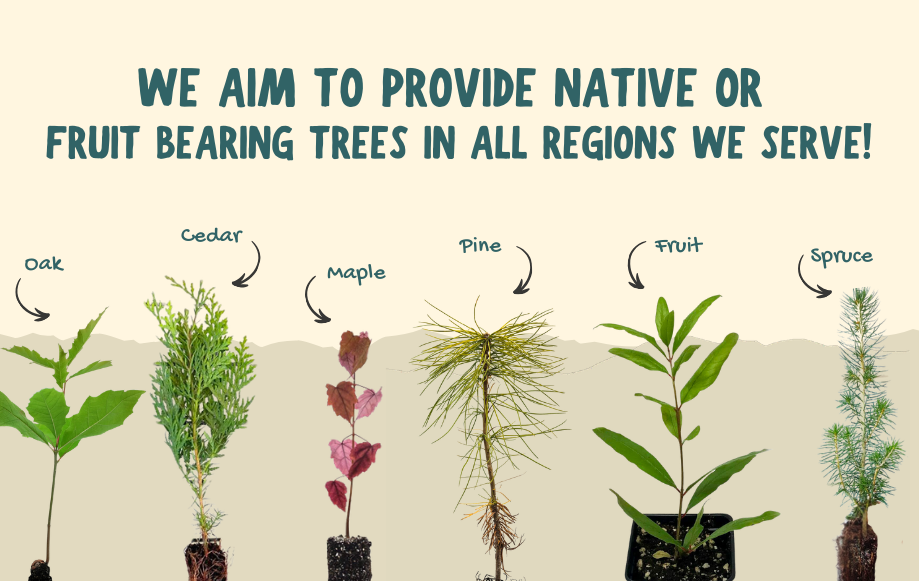
What Makes a Tree Native?

A native tree is one that has grown in a region for thousands—even millions of years. It evolved right alongside the local insects, birds, and soil.

Trees brought in from other countries or regions may look beautiful, but they often fall short for local wildlife. They can cause problems such as:

  • Risk of invasiveness: Some introduced trees spread aggressively, crowding out native plants.
  • Disrupted soil communities: Some non-native trees may not support the same soil fungi and underground networks as native species, and invasive species can disrupt local ecosystems.
  • Water imbalance: Some non-native trees use a lot more (or a lot less) water than local species, which can throw off the natural rhythm of streams, groundwater, and surrounding plants in some regions.
  • Lower overall ecosystem support: Compared to native species, non-natives often host far fewer insects, which weakens the entire food web.

So, why are native trees important? They are the foundation of a healthy, living landscape. Choosing the right native species for your area is the first and most important step in bringing nature to your neighborhood.

Native Trees and Butterflies

Native trees are the unsung heroes of butterfly survival. They offer essential food sources for caterpillars, shelter for chrysalises, and nectar-rich flowers for adults. Without the right trees, many butterfly species can’t complete their life cycles.

Some butterflies are picky eaters with very specific tree preferences. These specialized relationships create a delicate balance: when native trees decline, butterfly populations decline as well. Planting and preserving native trees is the key to keeping these winged beauties around.

Here’s an example:

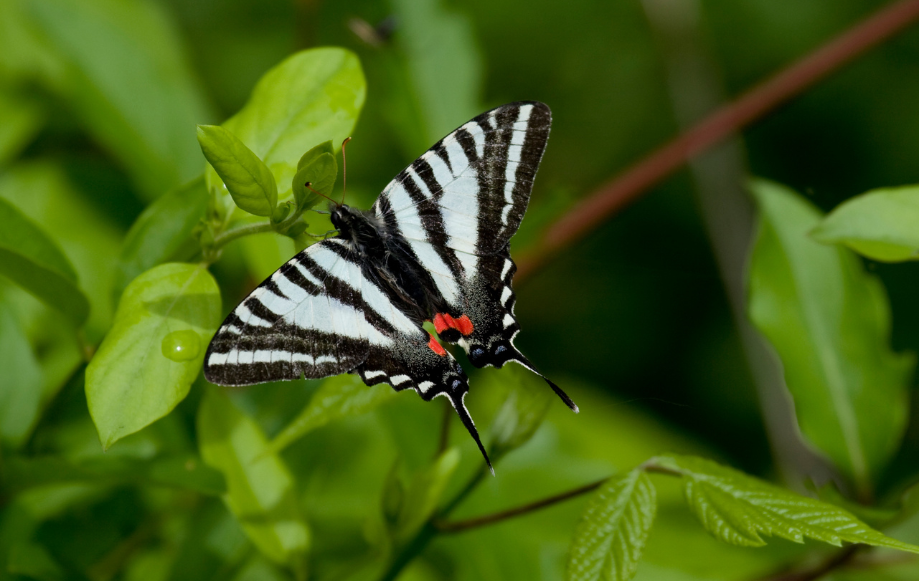
The zebra swallowtail butterfly takes “picky eater” to the extreme. This striking black-and-white insect depends entirely on one tree: the pawpaw. The caterpillars munch exclusively on pawpaw leaves, absorbing toxins that make them taste terrible to predators (imagine eating spicy food to become unappetizing — bold strategy). It’s a partnership millions of years in the making. Without pawpaws, these butterflies simply vanish.
Native Trees and Bees

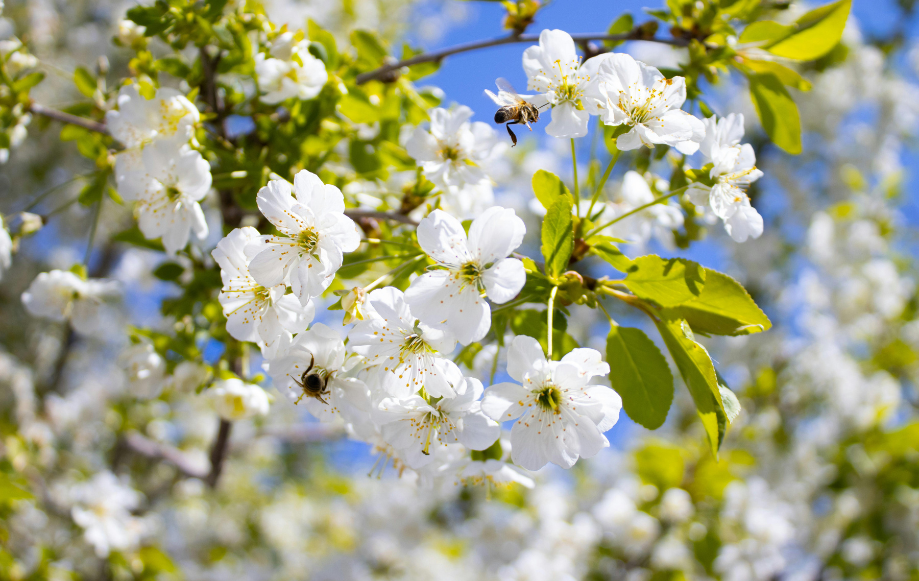
Trees provide shelter for native nesting bee species and carpenter bees, while also providing abundant food. In fact, some mature flowering trees can produce hundreds of thousands (even over a million) blossoms in a single season!

Native trees’ bloom periods are synchronized with local pollinators’ life cycles, meaning they flower exactly when bees need them most. This timing matters especially in early spring, when bees emerge hungry from winter, but most flowers haven’t started blooming yet.

When planning native garden plants, remember that bees and trees need each other year-round. Consider including early bloomers such as:

  • Red maple (nectar as early as February)
  • Willow (critical early pollen source)
  • Black cherry (attracts both bees and birds)

These native trees turn your yard into a pollinator powerhouse, supporting the tiny workers that keep flowers blooming and fruits forming.
Native Trees and Birds

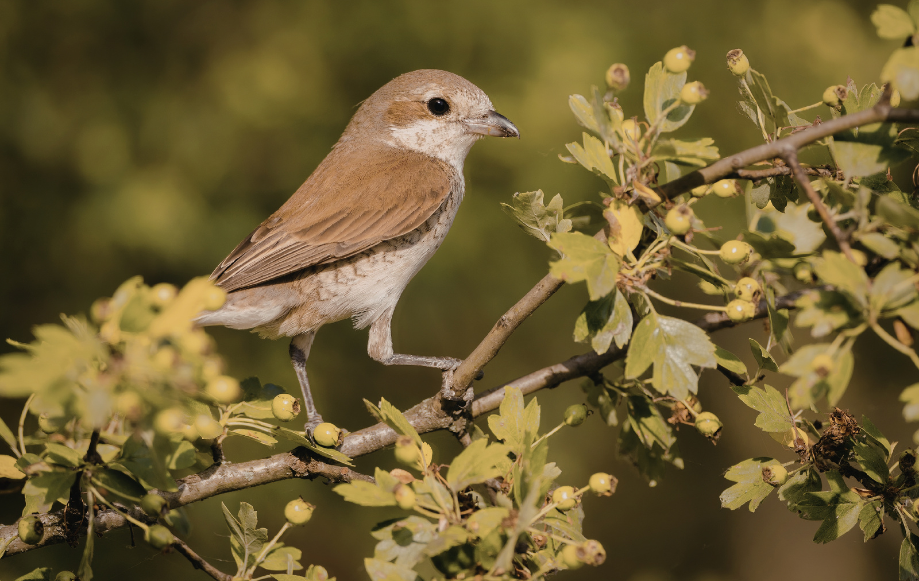
Birds and native trees share a relationship that’s all about food — specifically, caterpillars. Most North American songbirds feed insects to their chicks, and caterpillars are the go-to meal.

Top caterpillar-supporting trees include:

  • Oaks (the champions)
  • Cherries
  • Maples

“Not everyone loves to see caterpillars (though many turn into beautiful butterflies and moths), but each nest of baby songbirds needs 3000-4000 caterpillars to fledge. Hummingbirds also need caterpillars and small insects for protein.” (The True Value of Oaks, Jessica Warren, ANR Agent, Camden County)

Without these native trees hosting caterpillars, parent birds simply can’t find enough protein to raise their young. It’s that straightforward: no native trees, no caterpillars, no songbirds.
What You Can Do: Planting for the Future

When maintaining a yard, many people prioritize aesthetics over wildlife. Lawns are kept perfectly trimmed, and non-native ornamental plants are chosen for their appearance, not for their food or shelter value. The result is a backyard that’s beautiful to us but a tough place for birds, butterflies, and bees to thrive.

The solution starts with planting native trees. Look for pollinator-friendly plants at local native plant nurseries, follow tree-planting instructions specific to your region, and get kids involved in choosing species and watching them grow. Even small changes can turn your yard into a healthy ecosystem. Consider planting a native tree with your family this season!

About Neighborhood Forest

Neighborhood Forest is a nonprofit organization dedicated to giving every child the joy of planting and watching a tree grow. Since 2010, we’ve partnered with schools, libraries, and youth groups to distribute free trees to children across North America every Earth Day. Our mission is to instill a sense of wonder and responsibility toward the environment in young hearts and minds.

Here are some ways you can get involved:


The Mental Health Benefits of Trees: Why Nature Makes Us Happier


The Mental Health Benefits of Trees: Why Nature Makes Us Happier

Have you ever noticed how good you feel after spending time outside? Maybe you’ve climbed your favorite tree in the backyard, or walked through a park filled with tall oaks and maples. That wonderful feeling isn’t just in your imagination! Scientists have discovered that trees actually change what’s happening inside your brain, helping you feel calmer, happier, and more focused.

The link between nature and mental health is so powerful that doctors and teachers are paying attention. Neighborhood Forest gives free trees to kids across North America because we understand something important: when you plant a tree and watch it grow, you’re not only helping the planet. You’re also giving yourself a gift that keeps making you feel better, year after year.

Trees Help You Relax

Your body has a built-in alarm system called your nervous system. When you’re worried about a test or upset about something, this system fires up and makes your heart beat faster. Trees have an incredible power to calm all that down.

When you hang out with trees, your body produces less of the stress hormone cortisol. Think of cortisol like a worry chemical floating around inside you. Natural stress relief happens when you breathe in fresh air under leafy branches, listen to the wind, or simply rest in a green space. Your breathing slows down, your shoulders relax, and that tight feeling in your chest starts to fade away.

In Japan, this practice is called Shinrin-yoku, often translated as “forest bathing,” which means soaking up the forest atmosphere (no actual bathing required). You don’t need a huge forest, though. Even a single tree in your yard or a small collection of plants can help your nervous system find its calm again.

Trees Make Learning Easier

Have you ever struggled to concentrate on homework, but then found it easier to think after going on a walk or playing outside? Your brain needs breaks from screens and indoor spaces to work at its best.

Research shows that kids who spend regular time outdoors perform better in school. In addition to helping you calm down, nature therapy can also sharpen your ability to pay attention and solve problems. Here’s what happens when you add more green time to your day:

  • Your attention span gets longer and stronger
  • You remember information more easily
  • Creative ideas flow more freely
  • Problem-solving becomes less frustrating
  • Your mind feels clearer and more energized

Neighborhood Forest provides a variety of trees species every Earth Day for children grow their own forest right in their backyard! 

Trees Lift Your Mood

Trees have a way of cheering you up. They spark your brain to release serotonin and dopamine, making your mood feel a bit brighter. Outdoor play can be a powerful way to soak up that natural boost.

The benefits of nature exposure show up quickly. After just 20 minutes in an outdoor space, even without exercise, people report clear improvements in well-being, feeling happier and more relaxed. Colors seem brighter, problems seem smaller, and life feels more hopeful.

Planting and caring for a tree gives you purpose. Watching your tree grow taller each season fills you with pride. These positive feelings build up over time, creating a foundation of lasting happiness.

Trees Make Places Feel Like Home

Trees help us feel like we belong somewhere. When you have a special tree you’ve climbed, read under, or planted yourself, that place becomes part of who you are.

Tree therapy works because it connects you to something beyond yourself. Here are simple ways to weave trees deeper into your daily life:

  • Pick one tree to visit regularly and watch it change through the seasons (bonus points if you give it a name!)
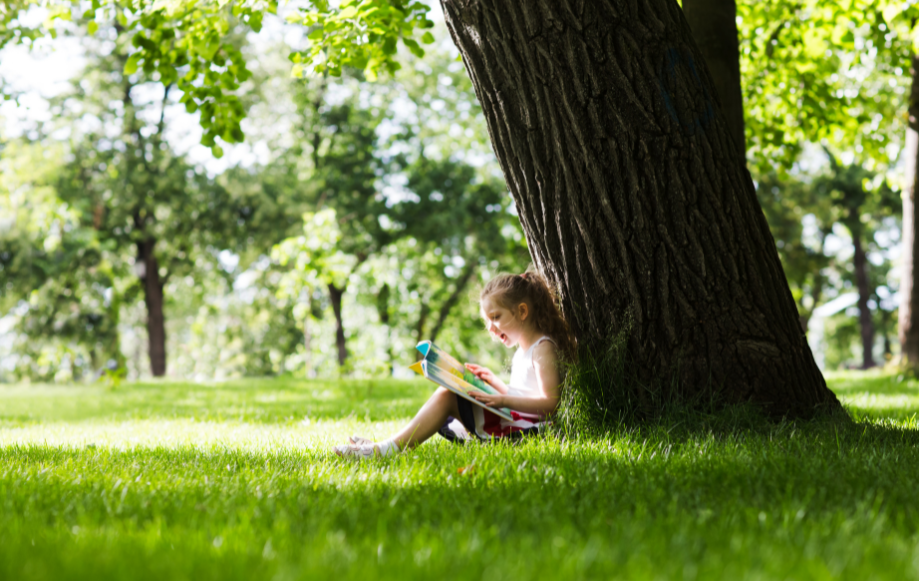
  • Create a tradition of picnicking or reading under the same tree with your family
  • Take photos next to your tree each birthday to see how you both grow
  • Read nature stories together as a family or curl up with them on your own
  • Start a journal about what you notice during your tree visits
  • Plant something and nurture it to build a caring relationship with nature

These small rituals transform ordinary trees into landmarks of your life. They become the keepers of your memories and part of your personal story.

How to Be a Tree-Friend Every Day

You don’t need a big yard or to live near a forest to bring more trees into your life. Start simple. Try nature-based activities, such as collecting leaves or drawing bark textures. If you don’t have outdoor space, grow an indoor plant and care for it each day.

The most important thing is consistency. Even five minutes with a tree and in nature counts. Touch its bark, sit under its branches, or simply look up through its leaves at the sky. Your brain will thank you for it, and over time, you’ll build a friendship with nature that makes every single day a little bit brighter!

About Neighborhood Forest

Neighborhood Forest is a nonprofit organization dedicated to giving every child the joy of planting and watching a tree grow. Since 2010, we’ve partnered with schools, libraries, and youth groups to distribute free trees to children across North America every Earth Day. Our mission is to instill a sense of wonder and responsibility toward the environment in young hearts and minds.

Here are some ways you can get involved:

2024 Annual Impact Report

We are so thrilled to share our impact, progress, and appreciation with you in our 2024 Annual Impact Report!


Neighborhood Forest Partners with Futurist Dana Klisanin for Earth Day 2024

February 12th, 2024

Collaboration Inspires Young Climate Activists Through Trees and Books

In honor of Earth Day 2024, Neighborhood Forest joins with acclaimed author and futurist Dana Klisanin to engage and inspire young climate activists.

Every Earth Day, Neighborhood Forest gives free trees to kids through schools, libraries, and youth organizations that register with the program. The nonprofit has even pinned a tree at every location where a child in their program has planted a tree over the past ten years.

This month, when parents and guardians sign their child up for a free tree, they will have the opportunity to purchase additional educational enrichment items, including Dr. Klisanin’s book Future Hack, the captivating first installment of “The Chronicles of G.A.I.A.” series. The highly acclaimed novel emboldens middle-grade students to embrace a growth mindset in the face of crises such as climate change. Every book purchased will fund a tree for a child in the Neighborhood Forest program.

neighborhoodforest

“We are thrilled about our collaboration with Dana and Future Hack to promote our shared mission of inspiring youth environmentalism,” says Vikas Narula, cofounder and CEO of Neighborhood Forest.

Dr. Klisanin adds, “I am equally excited to champion our future generation by joining hands with Neighborhood Forest to support their initiative to provide children with trees and books – immersive real-world educational tools to fuel their minds and bodies.”

About Neighborhood Forest:
Founded in 2010 by Vikas Narula and his wife, Priya Narula, Neighborhood Forest traces its roots back to Vikas’ college days in the early 1990s at Maharishi International University in Fairfield, Iowa. Introduced to a free tree project by David Kidd, Vikas, and his college friends adopted the program, distributing tens of thousands of trees to school children in southeast Iowa.

After relocating to Minneapolis, Vikas reignited his passion for giving trees to schoolchildren when his first son entered kindergarten, leading to the establishment of Neighborhood Forest. Starting with four schools in Minneapolis, the initiative has expanded to encompass over 1,500 schools, libraries, and youth groups in all 50 states across the United States and 5 provinces in Canada.

Every Earth Day, Neighborhood Forest distributes free trees to students nationwide, aiming to extend its reach to every child in North America and, ultimately, worldwide.

They have given over 100,000 kids their very own tree since 2021 and are aiming to reach 1 million children in the next few years.

With new institutions registering with the program every day, raising support for Neighborhood Forest through the current campaign is vital. For additional details, visit www.neighborhoodforest.org or contact info@neighborhoodforest.org.

About Dana Klisanin:
Featured in Forbes as one of the world’s top female futurists, Dana’s multifaceted career spans pioneering work in conscious media and global environmental advocacy. As CEO of Evolutionary Guidance Media and founder of ReWilding: Lab, she advocates for ‘rewilding the human psyche’ to improve environmental and human well-being. Her influential work, advising governments, corporations, and NGOs, includes award-winning research.

Stanford University recently published her theoretical research on resilience and the antifragility mindset in Intersections, Reinforcements, Cascades: Proceedings of the 2023 Stanford Existential Risks Conference.

About Future Hack (Chronicles of G.A.I.A. series):
Dr. Dana Klisanin introduces Future Hack, the inaugural book in the “Chronicles of G.A.I.A.” series published by Genius Cat Books. With a mission to inspire young climate activists and immerse them in the world of anticipatory thinking, the series speaks to environmental activism, education, and empowering the next generation. The kid heroes in this innovative series are recruited by the Global Anticipatory Intelligence Agency (aka: G.A.I.A.) to work on behalf of our fragile planet.

Donor Spotlight – The Uldrich Family

Why We Contribute to Neighborhood Forest: Planting Seeds of a Better Tomorrow

neighborhoodforest

The Uldrich family, of Minneapolis, has a deep-rooted love for trees (pun intended). It’s a love that goes beyond themselves and into a hope of a better future for generations to come. We asked Jack Uldrich, a well-recognized global futurist, speaker, and author, “Why does your family give to Neighborhood Forest?”  His response was, “The short, simple answer is that our family loves trees. (As the photos below attest.) At a deeper level, however, our love of trees transcends time.”

A Question that Touched Their Hearts

The Uldrich family’s story begins with a question posed by the renowned Jonas Salk, the developer of one of the first polio vaccines: “Are we being good ancestors?” This question struck a chord deep within their hearts, leading them to contemplate their legacy and the impact they were leaving on the planet.

Their honest reflection yielded a qualified “yes,” recognizing their efforts to “walk as lightly as possible upon the Earth” but acknowledging that we should, could, and must be doing more.

From Acorns to Oak Trees

Three years ago, the Uldrich family embarked on a journey to plant trees. It started with collecting acorns in late summer and germinating them over the winter in their basement refrigerator. They nurtured the oak saplings through spring and summer, preparing them for a new home in the fall, where they would be safe from threats like squirrels and deer.

Reestablishing an Oak Savannahneighborhoodforest

Two years ago they began visiting Jack’s alma mater, St. John’s University in Collegeville, Minnesota for few days every spring to plant Oak trees in an effort to reestablish an Oak savannah on the campus. This act serves a dual purpose: leaving a lasting physical legacy for future generations and mitigating, in a small way, the ravishing effects of climate change.

Joining Neighborhood Forest

Then, last year, the Uldrich family learned about Neighborhood Forest and the organization’s dedication to planting trees through the hands of children. They were thrilled to become sustaining members wanting to amplify their tree planting efforts and recognizing that more needed to be done especially due their family’s carbon footprint, which is larger than average due to Jack’s business travels. By supporting Neighborhood Forest, they found a way to help offset their carbon emissions and expand their tree planting efforts.

Jack shared, “Still, we know we must do even more if future generations are to have any hope of a better future, and we are eager to help Neighborhood Forest grow into a thriving organization that spans all of North America–and beyond.”

Living by a Beautiful Proverb

The Uldrich family’s love for trees and their dedication to planting them is beautifully encapsulated by an ancient Greek proverb: “Societies thrive when old people plant trees under whose shade they will never sit.”

In short, we love Neighborhood Forest because it is living this proverb and, in the process, making the world a better place today and for future generations.”

A Call to Action

The Uldrich family’s story is an inspiring example of how one family’s love for trees can lead to meaningful change. They invite you to join them in supporting Neighborhood Forest or even becoming sustaining members. In closing, Jack shared one last quote that their family loves and aims to live by, “The best time to plant a tree was 20 years. The next best time is today.”

Jack, Cindy, Meghan and Sean Uldrich

Minneapolis, Minnesota

neighborhoodforest

neighborhoodforest

2023 Annual Impact Report

We are so thrilled to share our impact, progress, and appreciation with you in our 2023 Annual Impact Report!

Neighborhood Forest Recognized as Top Tree Planting Charity

nhfNeighborhood Forest has been recognized as a top tree-planting charity by Impactful Ninja – a leading influencer and content creator centered around sustainable living and climate action.

Neighborhood Forest has been recognized as a distinguished tree-planting charity as well as a leader in environmental education.

We are honored and touched to be named alongside many other great organizations doing important work in the world, including Living Lands and Waters, The Jane Goodall Institute, and The International Tree Foundation.

We know and believe that this recognition will continue to help us reach more children as we spread joy, beauty, and goodness through tree planting and youth engagement.

Thank you, Impactful Ninja!!